|
|
Same
CN |
|
|
| |
|
A
study of the music "Chi Mai"-a
|
|
|
| The
"Chi Mai" is a famous music composed by Ennio Morricone
in the whole world. Many Chinese people know the Morricone's music
is because they listened the "Chi Mai" and then to find
"Ennio Morricone". But the "Chi Mai" is an odd
name for Chinese, so it has been draped on a mysterious overclothes
and it is accounts differ and opinions vary. For the sake of undo
the brainteaser, we have consulted Mr. Didier--The webmaster of the
famous "Chi Mai"
site. Mr. Didier has replied to us for it recent. Now we introduce
the article for everyone below: |
| |
|
Mr.Didier's
article in his reply on August 18,2007
|
"Chi
mai" means "Who ever" or "Who never",
depending on the sentence in which you use it. As in Dalida's
song: "Dove andranno i nostri fiori chi mai può dire":
"Who can ever say where our flowers will go". Used
on its own, "Chi mai" is like an expression of spite,
or restrained disappointment.
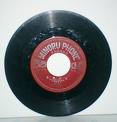
"Chi Mai" first appeared as early as in 1970 on
a German Vinyl 45", under the title "Terra Magica".
So it is difficult to know whether Morricone wrote this piece
as a stand-alone piece, or for the movie "Maddalena"
which was to appear the year after, with "Chi mai"
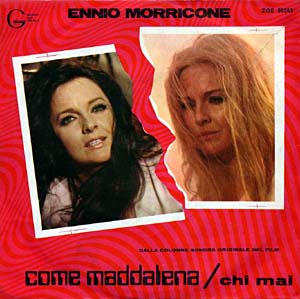
as a secondary theme. On the B-side of the 45" was the
piece soon to be called "Come Maddalena", but here
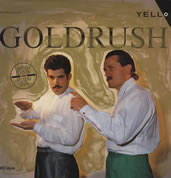
with the title "Goldrausch" (German for "Gold
Rush", but it has nothing in common with the piece also
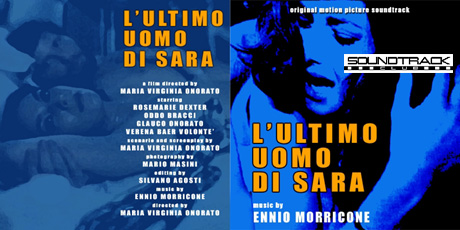
called "Gold Rush", actually written for "L'ultimo
uomo di Sara" with "Stanlio e Ollio" as original
title).
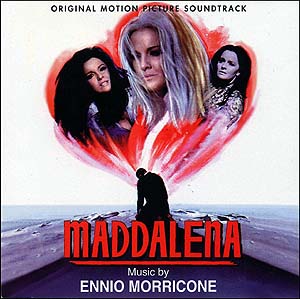
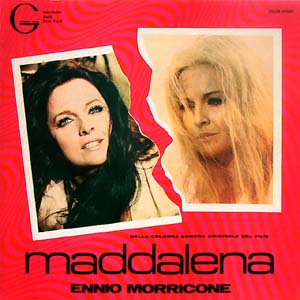
In 1971, General Music published 2 LP's: the soundtrack of
"Maddalena", including of course "Chi mai"
and "Come Maddalena", and a compilation called "Colori",
which included "Come Maddalena" again, but also
a version of "Chi mai" with Italian lyrics called
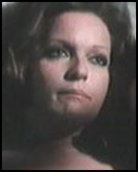
"Idiota", performed by Lisa Gastoni, the main actress
of the movie "Maddalena". Both LP's were released
as CD's in the Nineties.
The song also received French lyrics and English lyrics, each
time performed by Lisa Gastoni. The French and Italian versions
are available on the "Canto Morricone vol.3" compilation
CD; the English version is only available on a Japanese release
of the Maddalena score (by Avanz in 1997). The Italian version
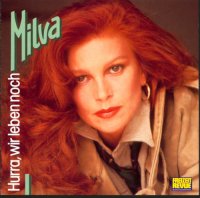
was also recorded by Milva in 1972, to appear on the "Dedicato
a Milva da Ennio Morricone" LP.
In 1977, Morricone decided to contribute to the disco fever
by writing a disco version of "Come Maddalena",
both a short and long versions, to be published on Vinyl 45"
and EP's. For the B-side, he re-arranged "Chi mai"
with a more linear melody, and with rock-sounding drums. Even
though this track doesn't have a disco style, it will be know
later as the "disco" version of "Chi mai".
A longer version was made, seemingly artifically expanded
from the 3:30 version in order to last 5:05, to be put on
the EP's. Released in the UK, this piece was to become a huge
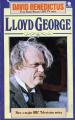
success in 1978, also because it was used for a BBC-documentary
about David Lloyd George.
It seems that, visiting the UK in that period, Jean-Paul Belmondo
noticed the piece and liked it so much that he asked Georges
Lautner, the director of his upcoming movie "Le professionnel"
to use it for its soundtrack. Lautner and Morricone came together
as Morricone agreed to write the score in the style of the
"disco version" of "Chi mai". It is not
clear whether Morricone knew that Lautner and Belmondo actually
wanted to use "Chi mai", or if he thought that they
wanted something similar. Nevertheless, in the resulting movie,
there is hardly anything else than "Chi mai" (except
for the main titles), in spite of the huge amount of original
music which Morricone wrote for that movie (recommended is
the CD from GDM in 2002, with not less than 50 minutes of
music). The movie and the music were a huge success in France
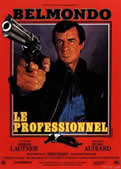
and french-speaking countries. The poster of the movie was
even re-worked to put Morricone's name in even bigger characters
than Lautner's. In many places, "Chi mai" is known
as the music from "Le professionnel", or from an
advertisement for dog-food which used it in the Eighties.
But definitely not as the music from "Maddalena",
the movie being unknown outside of Italy.
Morricone rearranged"Chi mai" again several times
later: for pan-flutes in 1993, for live-renditions in 1987
and in 2006, for new English lyrics for the Amii Stewart album
in 1990 (under the title "Desire"), and again for
different English lyrics for the Dulce Pontes album in 2003
(under the title "House of no regrets"). It was
covered many times by artists such as Nini Rosso (1981), The
Shadows (1981), James Last (1982), Willem Breuker (1989),
Triology (1998), Richard Clayderman (1999), John Zorn (2000),
Nightmares on Wax (2001), and many more. Even Edda Dell'Orso
made her own version of it for her "Classical Machine"
project in 1998. New French lyrics were written for Danièle
Licari (famous for being the voice of Saint-Preux's "Concerto
pour une voix"), under the title "Mal de toi"
in 1981. And, of course, the City of Prague Philharmonic,
the London Starlight Orchestra and others have their own version
of it. |
|
A
revise come from Mr. Didier on Sep.23, 2007
We
received Mr. Didier's E-mail on Sep.23,2007, he talks a
revise about "Chi Mai" article (See above). Below
is its extract:
......Something
else: there was an error in my article about Chi Mai: On
the album "Colori", the piece called "Idiota
(Chi mai)" is actually NOT the song in Italian by Lisa
Gastoni. It is the main version of the theme, instrumental
(which appears, for example, on the Terra Magica 45rpm).
I wonder why they have called it "Idiota". Sorry
for the mistake......
Thanks
for Mr.Didier's revise and his kindness
|
|
|
| Thanks
a lot Mr. Didier. His article clearly explain the "Chi Mai"'s
source and history. Below is relative reference materials for understand
Mr.Didier's article |
|
001-Vinyl
45"and LP
|
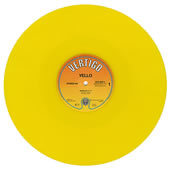
| A
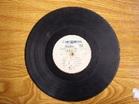
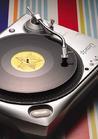
gramophone record (also phonograph record, or simply
record) is an analogue sound storage medium consisting
of a flat disc with an inscribed modulated spiral
groove starting near the periphery and ending near
the center of the disc. Gramophone records were the
primary medium used for commercial music reproduction
for most of the 20th century. They replaced the phonograph
cylinder as the most popular recording medium in the
1900s, and although they were supplanted in popularity
in the late 1980s by digital media, they continue
to be manufactured and sold as of 2007. Gramophone
records remain the medium of choice for some audiophiles,
and specialist areas such as electronica.
The
terms LP record (LP, 33, or 33-1/3 rpm record),
EP, 16-2/3 rpm record (16), 45 rpm record (45),
and 78 rpm record (78) each refer to specific types
of gramophone records. Except for the LP and EP
(which are acronyms for Long Play and Extended Play
respectively), these type designations refer to
their rotational speeds in revolutions per minute
(RPM). LPs, 45s, and 16s are usually made of polyvinyl
chloride (PVC), and hence may be referred to as
vinyl records or simply vinyl.(more see
here)
|
|
|
|
|
|
|
|
|
|
|
002-"Maddalena"and
"Come Maddalena"
|
| "Maddalena"is
a movie composed by Ennio Morricone made by Italy in
1970/1971. The "Chi Mai" and "come Maddalena"
was contained in it. The music is in
this page (023 item) of the web site. Below are
selected music
for your convenience |
|
001
|
COME
MADDALENA
|
|
|
002
|
CHI
MAI
|
|
|
003
|
UNA
DONNA DA RICORDARE
|
|
|
004
|
PAZZIA
IN CIELO
|
|
|
005
|
CHI
MAI
|
|
|
|
|
|
|
|
|
|
|
|
|
|
003-"L'ultimo
uomo DI Sara" 和 "Stanlio e Ollio"
|
| The
movie made by Italy and Yugoslavia. Its other name is
"Sarah's Last Man",composed by Ennio morricone.
The music in this
page of the web site 023 item |
|
Listen
"Stanlio e Ollio" 
|
| See
here 01,
02,
03 |
|
|
004-Goldrausch
(Gold
Rush)
(Note: They maybe not correctly . The correctly one see
next page)
|
|
|
|
005-Terra
Magica (Note:
They maybe not correctly . The correctly one see
next page)
|
|
|
|
|
006-B-side
|
|
“B-Sides”
redirects here. For the 2002 Marvel Comics limited series,
see Craptacular B-sides
In recorded music, the terms A-side and B-side refer to
the two sides of 7 inch vinyl records on which singles were
released beginning in the 1950s. The terms have come to
refer to the types of song conventionally placed on each
side of the record, with the Aside being the featured song
(the one that the record producer hopes will receive radio
airplay and become a "hit"), while the B-side,
or "flipside," is secondary (often a song that
does not appear on a band's LP)
B-side
songs are released on the same record as a single to provide
extra "value for money". There are several types
of material commonly released in this way:
a different
version (e.g., instrumental, a cappella, live, acoustic,
remixed version or in another language/text) of the Aside
another song from the same album, which the record company
does not want to release on its own
a song not considered good enough for the album
a song that was stylistically unsuitable for the album
a song that had not yet been completed at the time of the
album's release
a cover of a (famous) song
a different version of a song from the album (More
see here)
|
|
|
007-lisa
gastoni and Milva
|
|
|
|
|
|
|
|
|
|
|
|
|
|
|
|
005
|
Lisa
gastoni: chi mai (Idiota)
|
|
|
014
|
Lisa
gastoni: chi mai
|
|
"Milva
- dedicato a Milva DA Ennio Morricone"(See
here)
|
|
003
|
Chi
Mai
|
|
|
|
|
|
|
|
008-"The
Life And Times Of David Lloyd George"
|
| "The
Life and Times of David Lloyd George" was a 1981
BBC Wales drama starring Philip Madoc, Kika Markham
and David Markham. It featured music by Ennio Morricone
|
|
Played
list in BBC TV
|
|
No.
|
Title
|
Date
|
Images
|
|
001
|
Don't
Try, Do It...
|
1981.3.4
|
|
|
|
002
|
A
Wicked
|
1981.3.11
|
|
003
|
He
Is Wise, and Merciful
|
1981.3.18
|
|
004
|
All Flesh Is Grass
|
1981.3.25
|
|
005
|
Well,
We're In
|
1981.4.1.
|
|
006
|
No.
10
|
1981.4.8.
|
|
007
|
An
Honourable Peace
|
1981.4.12.
|
|
008
|
Win
or Lose
|
1981.4.25.
|
|
009
|
Footnotes
of History
|
1981.4.29.
|
|
|
|
David
Lloyd George was the sole male heir of Betsy and William
George. By the time Davy was two his father was dead
and the family had moved to Llanystudmdwy in Wales
where Davy spent his formative years immersed in studying
religion, law and public debate - studies that in
later years were to stand him in good stead. An ambitious
and determined young man, he wooed and won the hand
of Maggie Owen - an advantageous match which her parents
desperately tried to stop. Having won a Liberal seat
in the Commons, Lloyd George went on to become President
of the Board of Trade and then Chancellor of the Exchequer,
where he presented the highly controversial 'People's
Budget' which later became the backbone of the Welfare
State. Finally, in 1916, he was elected Prime Minister
of the coalition government which ruled for the remainder
of the First World War. A legend as a politician,
womaniser and innovator, this was surely his greatest
hour. And yet to his parliamentary colleagues and
friends he remained an enigma. In this sensational
biography David Benedictus gives a candid and compelling
portrayal of the twentieth century's most fascinating
and controversial political leader.(See
here)
|
|
|
|
The
"Chi Mai" in "The Life And
Times Of David Lloyd George"
|
|
No.
|
Format
|
Usage
|
|
001
|
28Kbps
WMA 775K
|
Listen
|
|
002
|
192Kbps
Mp3 7.25M
|
Right
click Download 
|
|
|
Actual
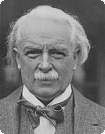
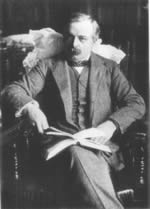
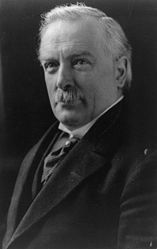
British Premier David Lloyd George (1863-1945)
|
|
|
|
|
|
David
Lloyd George
|
Premier
David Lloyd George in his office
|
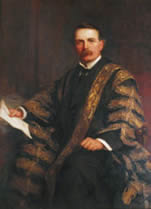
Portrait
of David Lloyd George as chancellor of the exchequer
by christopher Williams(1911) |
|
|
|
|
|
|
009-"Le
Professionel"(1981) and Jean-Paul Belmondo
|
|
|
|
|
|
Famous
French actor Jean-Paul Belmondo
|
|
|
|
The "Chi Mai" melody in the
movie "Le Professionel"
|
|
No.
|
Name
|
Listen
|
|
001
|
The
wind, the scream-First theme
|
|
|
003
|
The
wind, the scream-First variation
|
|
|
005
|
The
wind, the scream-Second variation
|
|
|
006
|
Bach-Second
variation
|
|
|
010
|
The
wind, the scream-Third variation
|
|
|
013
|
Chi
mai
|
|
|
014
|
The
wind, the scream-Main titles movie version
|
|
|
015
|
The
wind, the scream-Alternate version
|
|
|
|
|
| |
|
|
|
011-The
"Chi Mai" performented by the famous musicians
|
| |
|
No.
|
Musicians
|
Name
|
Album
|
Listen
|
Note
|
|
001
|
Dulce
Pontes
|
|
Maddalena
|
House
Of No Regrets
|
|
|
|
002
|
Richard
Clayderman
|
|
Medley
- Chi Mai, Intermezzo, Here's To You
|
The
Fantastic Movie Story Of Ennio Morricone
|
|
|
|
003
|
Amii
Stewart
|
|
Chi
Mai
|
Desire
|
|
|
|
004
|
George
Evelyn
|
|
Chi
Mai
|
|
|
|
|
|
|
|
|
|
|
|
|
| |
|
|
|
|
|
Thanks
a lot for Mr. Didier and wish "Chi Mai" site will be more
prosperous
|
|
|
|
| |
|
|
| |
|
| |
|
|
| |
|